
Despite these early successes, Kenya lacks much of the necessary routine and high-quality data to assess and improve the performance of its PHC system while facing a considerable funding shortfall to respond to local population needs.
In anticipation of challenges like these, in 2020 Management Sciences for Health (MSH) and the Kenya Ministry of Health partnered to generate data on PHC facilities in six counties, assessing key indicators on their performance, levels of expenditures, and resource needs using MSH’s PHC-CAP Tool
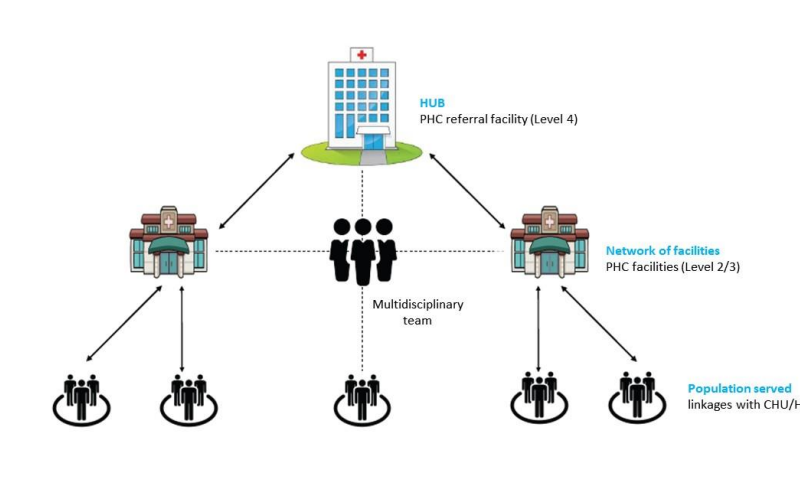
The analysis found that investment in the PHC system varied greatly across counties. To achieve universal access to PHC services, Kenya would need to invest additional resources compared to its current level of funding. This financial gap could also potentially be closed through the PCN approach, which aims to improve PHC efficiency, notably by leveraging existing human resources, improving the staffing mix among facilities, increasing demand for services, and instituting better referral practices to prevent bypass.
- Explicitly specify the services to which the population is entitled as part of a PHC benefits package and at which level of the health system each service is available. Align the package of services with a country’s available resources, accounting for the health system’s existing infrastructure, human resources, and governance.
- Ensure that a wide range of quality services are available at lower-level facilities. Many health centers and dispensaries in Kenya lack adequate equipment and medical supplies, while staff lack training and motivation to provide high-quality services, leading patients to self-refer to higher-level facilities. Investment in PHC facilities should not be limited to “brick and mortar” and should enhance the skillset and incentives of human resources and ensure adequate medical supplies and equipment.
- Institutionalize strategies for referrals and gatekeeping to optimize available resources. To reduce bypass and ensure that each level of the health system meets patient demand, some health systems have instituted specific referral policies and gatekeeping mechanisms. For example, patients can only access higher levels of care through referrals or by paying additional fees for direct access. In Kenya, the National Health Insurance Fund could potentially limit reimbursement for certain services if provided at hospitals while leveraging provider payment mechanisms to incentivize service provision at specific levels of the PHC system.
- Expand task-shifting of services to make more efficient use of the existing health workforce. To enhance the reach and impact of lower-level health facilities and workforce cadres, certain PHC services could be shifted away from higher volume facilities. For example, through Kenya’s Community Health Strategy (2020–25), paid community health promoters (a cadre whose value has not been fully realized and accepted) would deliver a greater proportion of preventive, educative, and promotive health services.
- Strengthen health information systems to routinely capture adequate data for enhanced decision making and performance monitoring. To help optimally channel resources for PHC, a combination of routine data is needed (e.g., number of types of health facilities, cadres of human resources, health service statistics, detailed expenditures). Together, these data can help to estimate the resource gap needed to deliver quality PHC services and identify where additional resources are needed or where there are opportunities to shift resources elsewhere.
- Ensure that all stakeholders are engaged and supportive of the approach. This includes, but is not limited to, faith-based organizations, the private sector, and key segments of the community such as women, youth, and persons living with disabilities.
