
For health facilities in Ghana’s Akwapim South municipality, errors in insurance claims carried a cost. Staff had already provided care, and each rejected claim put reimbursement for that care at risk. Facilities rely on those payments to cover medicines, supplies, and the everyday costs of providing care.
The district health management team made reducing these rejections a priority. With support from MSH and Ubora Institute in Ghana, district leaders identified weaknesses in its claims processes and put practical solutions in place. The median share of claims rejected fell from 11% in the baseline period to 6.8% during implementation.
The experience illustrates an essential part of financing primary health care: ensuring that local teams have the skills, information, and management processes to turn financing commitments into resources facilities can use.
Finding where claims went wrong
In Akwapim South, the district team found that facilities frequently submitted claims late or with errors that did not comply with NHIS guidelines. This created additional financial pressure on facilities at a time when they were seeking to expand access to and improve the quality of PHC services.
Ghana’s National Health Insurance Scheme (NHIS) reimburses participating health facilities for covered services provided to insured patients. Facilities submit claims, which are reviewed against requirements such as patient eligibility, treatment guidelines, and approved prices. However, more than two decades after the adoption of the NHIS, health facilities continue to face challenges in securing timely and complete reimbursement for services provided to insured patients. According to standard protocols, claims must be reimbursed 90 days after submission; however, facilities report that the actual timeline for receiving payments Delayed reimbursements can disrupt health facilities’ daily operations, while rejected claims result in lost revenue that could otherwise support service delivery. Improving claims management is therefore crucial for protecting facility revenue and ensuring NHIS financing translates to improve service delivery.
District Leaders Put Plans into Action
Through the PHC Leadership Development Program (PHC-LDP), a component of the Gates Foundation-funded PHC Performance Management (PHC-PM) Activity, district teams used data to identify a priority PHC challenge, examine its causes, and develop an action plan to meaningfully address it. Flexible catalytic grants provided resources to put locally identified solutions into practice.
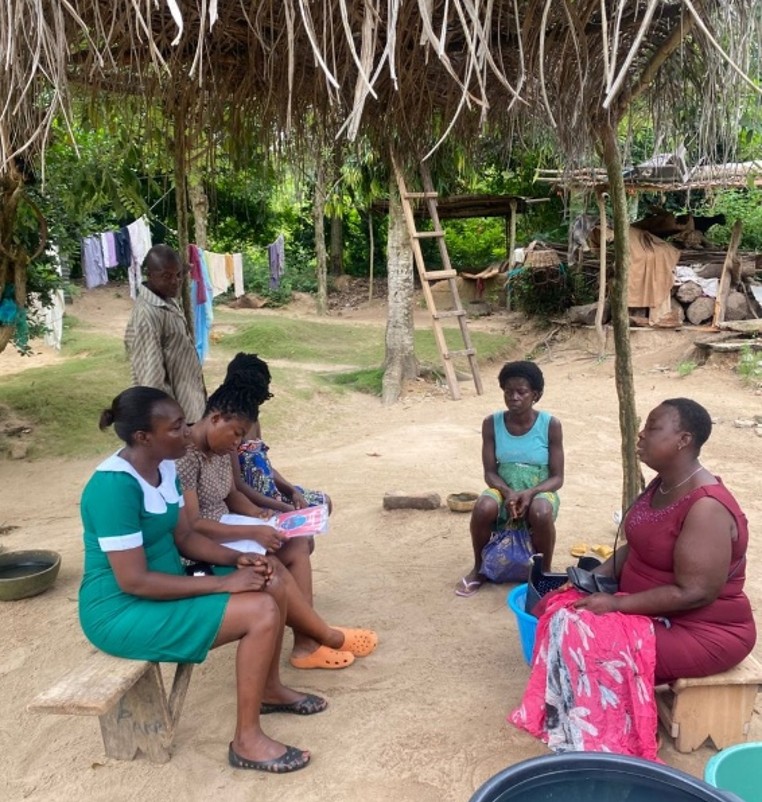
In Akwapim South, the district team used this process to strengthen claims management across the municipality’s 22 health facilities. The team purchased computers for electronic claims processing, established a district claims support center, strengthened facility and sub-municipal claims review teams, and trained staff on NHIS guidelines and reporting requirements. It also introduced incentives to recognize improvements in claims processing.
Together, these measures addressed both the tools staff needed and the routines for using them effectively.
The reported median rejection rate fell from 11.1% in the baseline period (October 2023-July 2024) to 6.6% after Akwapim South began addressing claims rejections (August 2024-December 2025), a decline of 4.5 percentage points.1
Two months illustrate what that improvement meant in financial terms. In July 2024, before the program began, 11% of claims submitted across 19 facilities were rejected. Those rejections accounted for about GHS 15,000 (US$1,310) of the GHS 118,000 claimed. By February 2026, the rejection rate was 6.8%, and the amount rejected had fallen to about GHS 10,000 (US$870), even as the total claimed rose to GHS 148,000. For facilities with tight budgets, more of the money they claimed for care they had already provided could move forward for payment.
How Will This Progress Be Sustained?
As project support approached its end, the district team turned its attention to maintaining the improvements. Staff needed a practical way to monitor claims, identify recurring problems, and follow up on outstanding submissions. Margaret Donkye, a health information officer on the district health management team, developed an Excel-based tracker to record the amount, type and status of claims submitted by each facility.
Used alongside CLAIM-it, the NHIS electronic claims application, the tracker gave the team a clearer view of claims performance across facilities. While the application supported electronic claims preparation and submission, the spreadsheet provided a way to organize information for district-level monitoring and follow-up.
Its value lay in connecting information to action: giving the team a clearer basis for identifying where attention was needed and maintaining oversight of the claims process.
The district shared the approach with national and regional representatives at the PHC-PM closeout event, offering a practical example for other teams facing similar challenges.
A Lesson for Primary Health Care Financing
Akwapim South’s experience shows what is possible for other districts facing persistent claims management challenges in a context of constrained health financing. By reducing rejected claims, Akwapim South has protected resources already available within the health system and ensure that more funding reaches facilities to support PHC delivery. Importantly, Akwapim South demonstrated that progress does not have to end with external funding. The Excel-based claims tracker is a low-cost, low-resource innovation that enables DHMTs to maintain a clear picture of district funds, improving decision-making for resource allocation and creating a clear picture of existing funds to map against donor and nationally funded initiatives. This template can also be repurposed to serve as a “public good” – a daily tool for districts to build their own capacity and manage their own claims vetting systems – and has already been shared in front of national and regional representatives at the PHC-PM closeout event.
PHC-LDP didn’t just impact service delivery or action plans – it increased staff motivation to come up with creative solutions to longstanding challenges.
Akwapim South’s experience shows that investing in local management capabilities can protect resources for primary care. Several factors made the improvement possible: staff with the skills to vet claims, clearly assigned responsibilities within the DHMT, routine review of claims data, and district leadership that made claims management a priority. MSH and Ubora Institute helped the team act on a priority it had already set. As staff change and project support ends, keeping claims review in job descriptions, setting aside time to review the data, and training new staff can help sustain those gains.
[1] The PHC Leadership Development Program ran in six-month performance improvement cycles from February 2024 through December 2025. Akwapim South selected claims rejections as a priority in the second cycle, which began in August 2024. The baseline for this analysis therefore covers October 2023 through July 2024, before the district began its claims improvement work.
