“People cannot benefit from services and treatment if they do not know they exist or do not trust the information they receive.”
—Vira Horovenko, MSH’s Senior Technical Advisor
A stronger foundation for public health communication
A real story can change the conversation
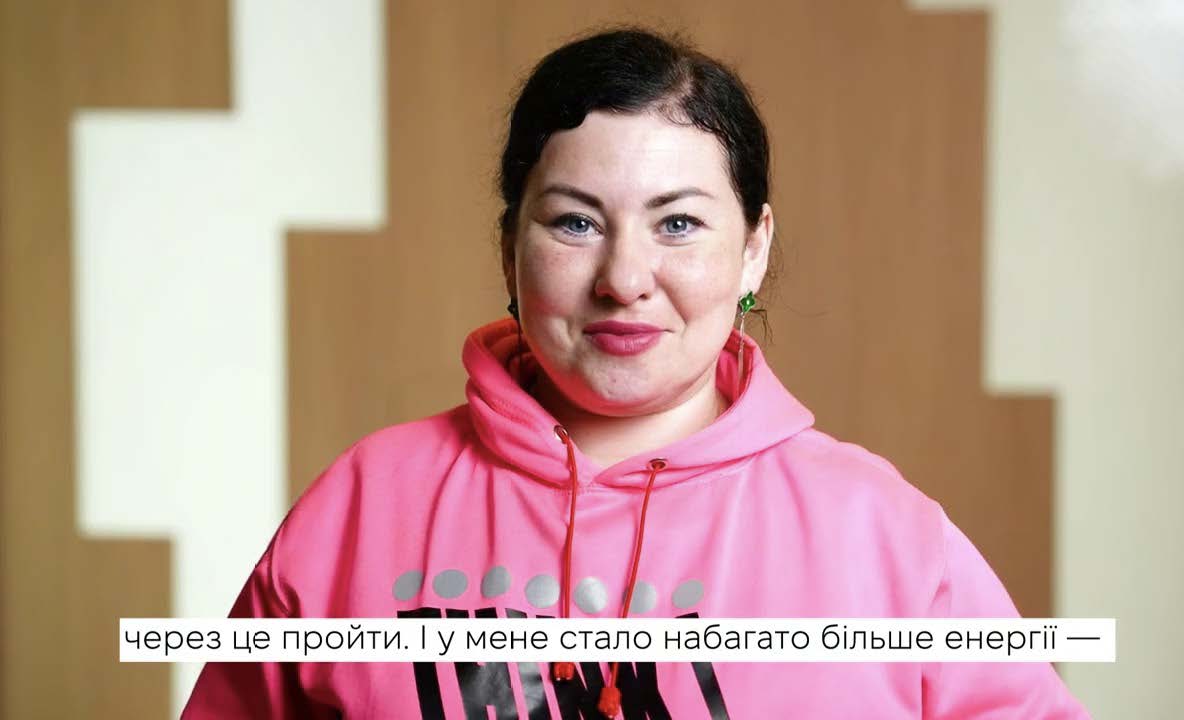
Today, Mariia works with a community-based organization, helping people from vulnerable groups navigate the health system, obtain treatment, and connect with social services. Her own experience helps her reassure others that effective treatment is available and that no one has to face a diagnosis alone.
She agreed to appear in the campaign because she understood the particular power of lived experience: “A real person’s story works better than any charts or graphs.”
Meeting people in everyday spaces
- The videos appeared on 2,440 screens across approximately 75% of Kyiv Metro trains, generating more than 1.5 million estimated exposures.
- Another 534 screens aboard Intercity trains connecting Ukraine’s major cities generated an estimated 500,000 additional exposures nationwide.
By placing the videos in spaces people already use, CPH made messages about testing and treatment part of everyday life. Ukrainians encountered them while waiting for appointments, commuting to work, or traveling between cities—not only when actively searching for health information.
“If someone sees a video while waiting for an appointment or riding the train and later decides to get tested or seek care, then we’ve helped start a conversation,” said Mykola Hanich, Head of Communications at CPH.
Expanding a trusted national public health voice
The campaign reached millions, but its significance extends beyond the numbers.
CPH strengthened its ability to plan and deliver coordinated, audience-informed communications through trusted national channels. The institution now has a stronger foundation for explaining public health priorities, addressing misconceptions, and connecting Ukrainians with the services available to them.