This November and December, MSH and its partners will share practical lessons from country-led efforts to strengthen supply chains, improve tuberculosis (TB) care, and help communities prepare for health emergencies. We will also convene experts for The Future of DR-TB, a roundtable on innovation, access, and impact in drug-resistant TB care alongside the Union World Conference on Lung Health.
What does it take for national institutions to manage and sustain reliable health supply chains? For new approaches to TB diagnosis and treatment to become part of routine care? For primary health care teams to prepare for emergencies while meeting communities’ everyday needs?
These questions connect MSH’s contributions to global health forums this November and December. MSH works alongside governments to turn country priorities into lasting health system improvements. Our colleagues will share evidence and experience developed with government teams, practitioners, communities, and country partners, exploring what works, what needs to adapt, and what it takes to sustain progress.
Three themes connect these contributions: country leadership, implementation in practice, and evidence shaped through partnership.
Country-led Systems: Making Sovereignty Practical
Country leadership takes shape through concrete decisions: who procures vaccines, who maintains digital systems, how workforce skills are developed, and which institutions have the resources and authority to keep services running.
At the Global Health Supply Chain Summit, MSH’s contributions draw on experience from Ukraine and Ethiopia to explore these dimensions of sovereignty.

Ukraine’s experience documents the transition from donor-driven vaccine procurement to a nationally managed process during crisis. It offers a practical perspective on how national institutions take responsibility for essential functions while responding to urgent needs.
Ethiopia’s contributions examine the capabilities that sustain a national supply chain: decentralized technical support for electronic logistics systems, migration to country-owned cloud services for a national medicines regulator, competency-based workforce development, and leadership development linked to team action in the workplace.
Together, these experiences show how country ownership translates into the institutions, skills, infrastructure, and management practices behind reliable access to health products.
Implementation in Practice: Connecting Innovation to Care
Building on decades of experience advancing TB prevention and care, MSH will bring practical expertise to the Union World Conference on Lung Health, sharing on finding missed cases, expanding access to diagnosis, and strengthening community-based care.
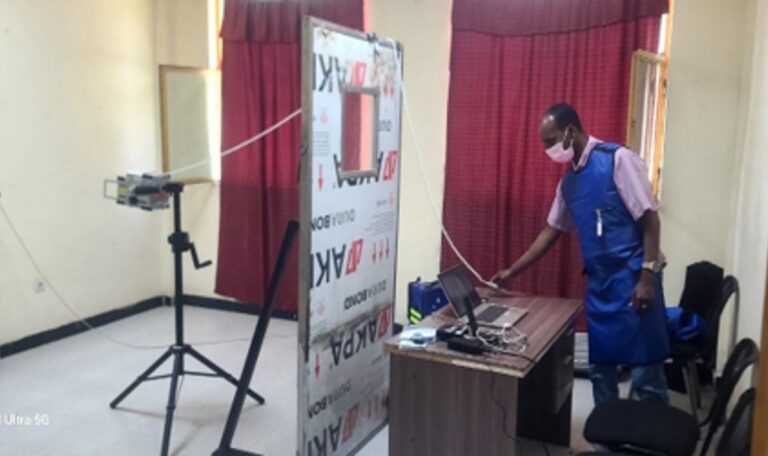
Presentations examine public-private approaches to case finding, collaboration with local organizations and TB survivors, stool-based GeneXpert testing for children, and the scale-up of diagnostic networks. They also explore repeated community screening and a locally driven approach to AI-powered chest X-ray screening in post-conflict Tigray.
These contributions examine what it takes to make diagnostic and service delivery innovations part of reliable, routine care: trained staff and functioning referral pathways to equipment maintenance, community engagement, and data that guide improvements.
Alongside the conference, MSH and Viatris will co-host a roundtable on innovation and impact in drug-resistant TB, bringing together policy, clinical, implementation, financing, and industry leaders representing 16 priority countries. The discussion will focus on practical actions to improve treatment access and patient outcomes.
Participants will examine treatment advances, emerging therapies, gaps between policy and practice, evolving resistance patterns, and health systems’ readiness to introduce and sustain new approaches. They will also consider the needs of people often underserved by existing care, including children, adolescents, pregnant women, and people with highly resistant TB.
In December, MSH’s contributions at the Health Systems Research symposium will extend this focus on implementation, sharing innovations and lessons that can inform broader health system improvements.
Evidence and Partnership: Connecting Communities and Systems
MSH’s partnership with Africa CDC carries momentum from the United Nations General Assembly into the Conference on Public Health in Africa (CPHIA), advancing our shared call for pandemic-ready, community-based primary health care.
MSH will join discussions on building epidemic-ready, community-based, and integrated primary health care teams. Our contributions will focus on leadership, management, and performance—critical capabilities teams need to turn preparedness plans into coordinated action while sustaining everyday care.
Across these forums, MSH will share evidence developed alongside national institutions, health professionals, communities, and local organizations. Their knowledge and experience shape how approaches are designed, adapted, and assessed.
By sharing what changed, whose decisions made it possible, and what remains difficult, these contributions offer practical lessons for countries and partners pursuing similar goals.
Follow MSH on LinkedIn and Facebook for updates from these conferences, insights from our experts, and lessons from our work with countries and partners.