
Addis Ababa gathering marks 25 years of tuberculosis research and calls for faster progress
Addis Ababa Gathering Marks 25 Years of Tuberculosis Research and Calls for Faster Progress
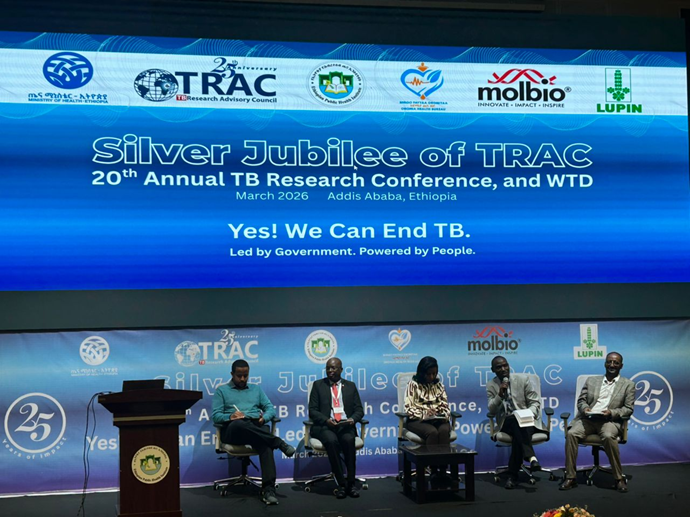
April 1, 2026—The Ethiopian Public Health Institute (EPHI) marked the silver jubilee of the Tuberculosis Research Advisory Council (TRAC) alongside the 20th Annual TB Research Conference and the World TB Day Commemoration from March 27 – 29, 2026 in Addis Ababa.
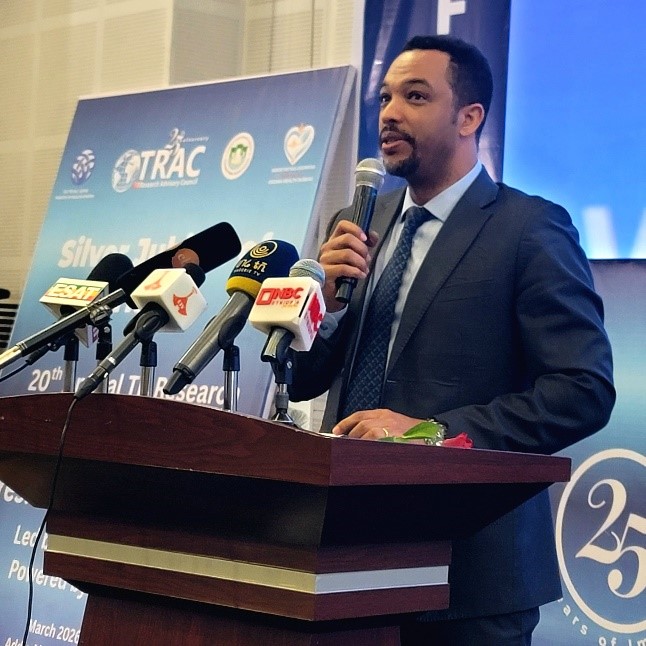
Bringing together policymakers, researchers, and partners, the gathering reflected both progress achieved and the urgency of accelerating efforts to end TB in Ethiopia and globally.
Opening the conference, Ethiopia’s State Minister of Health, Dr. Dereje Duguma, highlighted the country’s progress and reaffirmed the government’s commitment to the End TB Strategy.
“TRAC has brought policy and strategy formulation into practice, and the evidence has consistently informed government decisions on TB prevention and control in Ethiopia,” he said.
Over the past decade, TB incidence in Ethiopia has declined by 30%, with deaths reduced by 35%, alongside significant expansion in diagnostic capacity. Continued progress, he noted, will depend on stronger community engagement, resilient primary health care systems, and sustained innovation.
In his keynote address, TRAC Chairperson and Director General of the Armauer Hansen Research Institute (AHRI), Prof. Afework Kassu, underscored the global ambition to end TB by 2030.
“The ambition to end TB by 2030 is a cornerstone of the United Nations Sustainable Development Goals, aiming to halt the epidemic, reduce mortality by 90%, and reduce incidence by 80% compared to 2015 levels,” he said.
Welcoming participants, EPHI Director General, Dr. Mesay Hailu, described the gathering as an important platform for scientific exchange and policy dialogue, highlighting EPHI’s role in advancing surveillance, drug-resistance monitoring, and diagnostic capacity nationwide.
At the regional level, Prof. Netsanet Workneh, head of Oromia Health Bureau, emphasized both strong performance and ongoing challenges. The region has achieved over 95% case detection and more than 98% treatment success rates—demonstrating what is possible with sustained investment and systems strengthening.
Strengthening research, policy, and practice
Management Sciences for Health (MSH), through its U.S. Government-funded Eliminate TB Project, played an active role throughout the week—contributing to scientific exchange, policy dialogue, and national visibility around TB.
MSH experts delivered two plenary presentations—on TB financing in Ethiopia and on TB elimination research—alongside six abstracts (four oral and two poster presentations). Team members also chaired scientific sessions and engaged in strategic discussions shaping the future direction of TRAC and Ethiopia’s TB response.
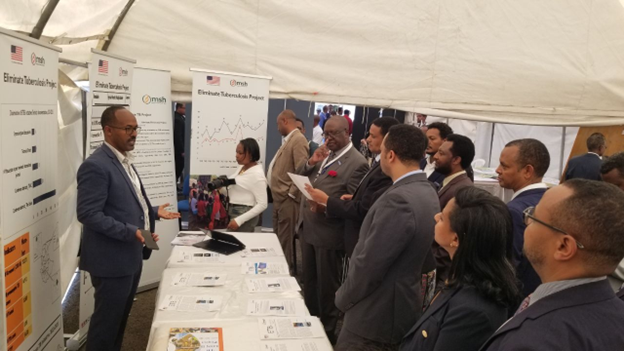
Across the conference, MSH’s contributions reflected a broader commitment to strengthening the systems that underpin TB prevention, diagnosis, and treatment—from financing and research to service delivery and community engagement.
The project also hosted an exhibition showcasing key initiatives, which drew strong engagement from national and global stakeholders, including representatives from EPHI, AHRI, the Ministry of Health, the World Health Organization, and development partners.
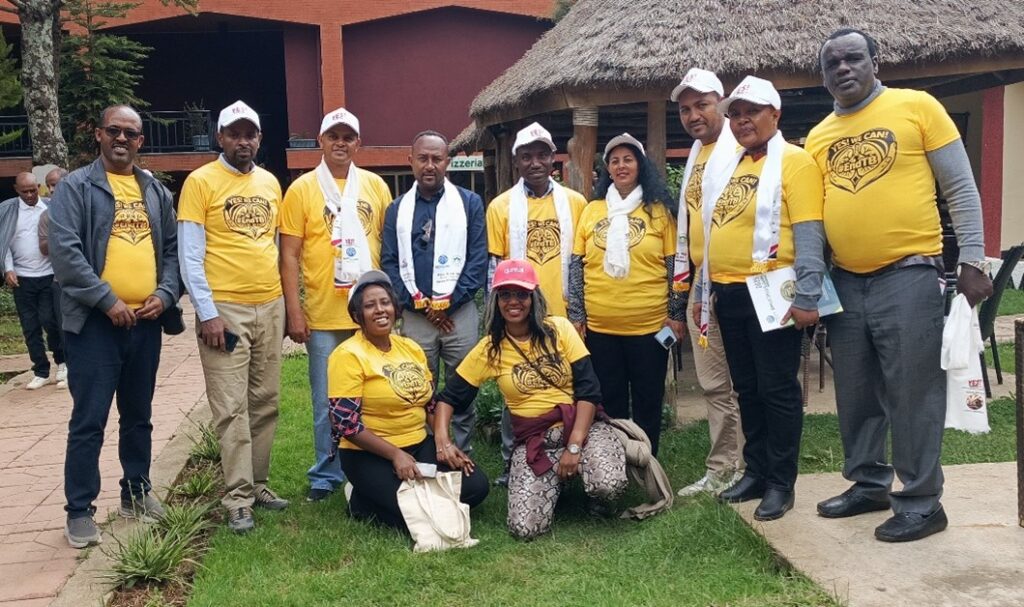
Beyond the conference, MSH supported the participation of Ethiopian parliamentarians in World TB Day commemorations held in Sululta, Shaggar City Administration, reinforcing the critical link between evidence, policy, and sustained national leadership. Engagement with policymakers—including members of parliamentary standing committees—highlighted the importance of continued advocacy and domestic ownership in advancing TB outcomes.
Recognizing excellence and sustaining momentum
The week also highlighted excellence across Ethiopia’s TB response. Health facilities, including Garamulata Hospital in East Hararghe and Shene Gibe Hospital in Jimma Zone, were recognized for delivering high-quality, comprehensive care, including for drug-resistant TB.
MSH’s contributions were further recognized through awards and acknowledgments of research and programmatic impact. Dr. Zewdu Gashu received a research excellence award for his TB-related publications over the past decade—reflecting the depth of evidence generated through MSH-supported programs.
These achievements reflect not only technical progress, but the result of sustained collaboration, coordination, and commitment across institutions and partners.
As countries work toward ending TB, gatherings like TRAC underscore a central lesson: progress depends on strong systems—where research informs policy, policy guides implementation, and services reach communities consistently and equitably.
MSH remains committed to working alongside the Government of Ethiopia and partners to strengthen these systems and accelerate progress toward ending TB.