
Government Led-Contracting as a Critical Response to Changing Health Financing Landscape
Government Led-Contracting as a Critical Response to Changing Health Financing Landscape
This post was originally posted on the Joint Learning Network
By: Obioma Chijioke-Akaniro, Emmanuel Fong, Thamiso Sebolao, James Soki, Sara Wilhelmsen, Rahul Kadarpeta
The global health landscape is not merely shifting – it has fractured. The much anticipated “2026 Funding Cliff” has arrived, bringing with it a sharp retrenchment in development assistance for health. Between 2024 and 2025 alone, global aid flows declined by 21 percent, driven largely by a dramatic contraction in major bilateral financing. A recent analysis published in The Lancet Global Health warns that such abrupt reductions risk millions of preventable deaths by 2030, threatening to undo two decades of hard-won progress in controlling infectious diseases.
For countries confronting this sudden end to aid-dependency, the challenge is no longer simply one of sustainability, but of reinvention. How can health systems be rebuilt to be both sovereign and resilient in an era of constrained external financing? The answer lies not only in mobilizing domestic resources, but in fundamentally re-organizing service delivery, governance, and accountability with the collective power of governments, private sector (not for profit and commercial), civil society, and communities. Contracting of health services sits at the heart of this re-organization. By establishing clear legal and institutional pathways for contracting, governments can deliberately integrate the unique reach and capabilities of private and civil society organizations into national health systems. Well-designed contracting arrangements allow essential services to reach the most vulnerable populations, even as external lifelines recede.
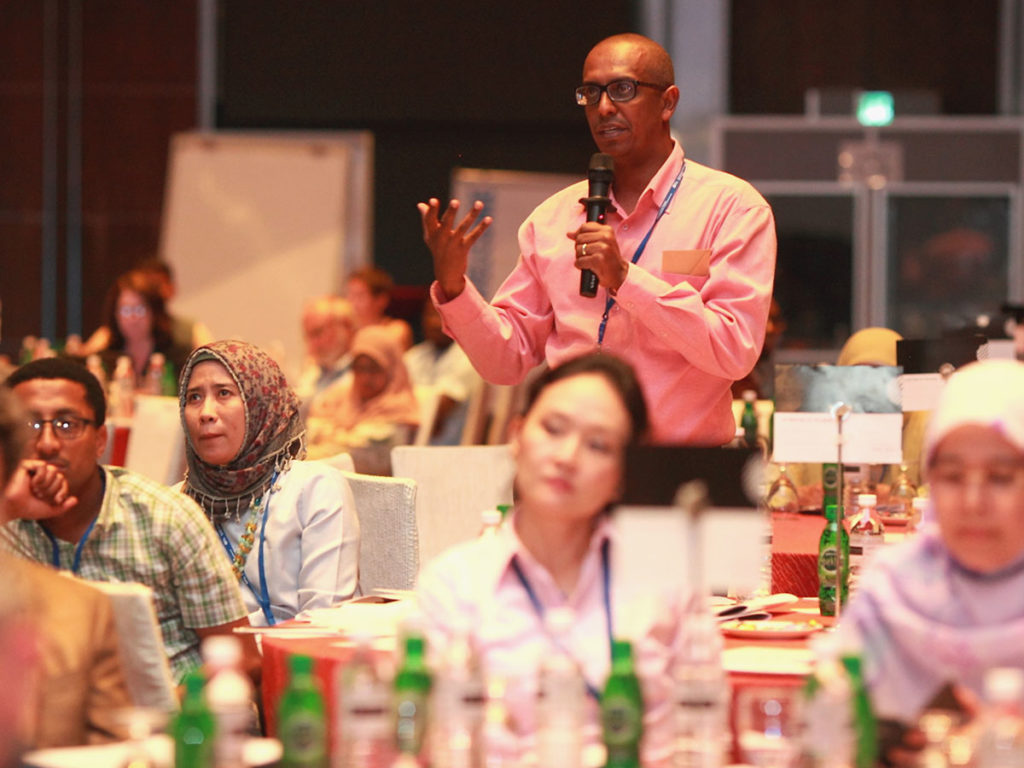
It was against a very different global backdrop that the JLN Collaborative for Contracting Organizations for Health-Related Services – facilitated by Management Sciences for Health (MSH) – was launched in February 2024. The collaborative brought together 40 senior leadership and practitioners from Ministry of Health at national and state level and implementing units – policy and planning, national disease control programs, procurement etc. from 12 countries – Bangladesh, Botswana, Ethiopia, Ghana, Tamil Nadu (India), Kenya, Liberia, Malaysia, Nigeria, Philippines, South Africa, and Uganda. The aim was to learn from each other and collectively solve for ways Government–led contracting can leverage the complementary skill-sets of private sector (not for profit and commercial) and reach of diverse health system actors, using their own procurement system and domestic funds, to increase health system efficiency and effectiveness.
With rapidly changing funding realities in their countries, participants now find themselves solving difficult questions: what gets funded, how priorities are set, and how domestic resources can be mobilized to sustain essential services and how contracting can play an important role in this by making the health system more efficient.
In this new reality, contracting is no longer a ‘nice-to-have’ technical option – it is a strategic imperative for countries determined to protect health gains and chart for a more self-reliant future.
“Peer consultations” as a format for knowledge exchange during the collaborative (where participants acted as internal consultants for one another) and “benchmarking” with other countries helped to ‘normalize’ the challenges of contracting. Realizing that obstacles in regulatory environments or political buy-in were shared experiences rather than isolated failures. The practical country mini-action plans developed during the collaborative prepared them to discuss and tackle real-time challenges in varied settings. Some country participants have put this knowledge and experience to use during these difficult times, demonstrating how contracting capacity can extend beyond theory and pilots to influence broader practical system reforms.
- Prompted by the funding shift, Nigeria domestically financed the contracting of a health-related activity for the first time – a direct result of the urgent need to bridge gaps.
- Bangladesh successfully passed legislation ‘Public Procurement Rules, September 2025’ allowing for strategic purchasing, moving from a pilot phase to implementation.
- Botswana is using the learnings to shape the national health insurance design discussions on how services, including TB may be purchased under future financing arrangements.
What is changing now is not only whether countries contract, but how they do so. Moving decisively from participation to action – and by embracing contracting as a core function of the health system – governments have an opportunity to transform. Contracting, when designed and governed well, allows countries to channel scarce resources where they deliver the greatest value, integrate trusted non-state actors into national systems, and anchor service delivery firmly within domestic priorities.
The experience of the Collaborative shows that this transition is not theoretical. Across countries, shared learning, peer exchange, and practical problem-solving have helped translate policy intent into implementable models – grounded in law, adapted to context, and responsive to real-world constraints. As these lessons are taken and applied, they offer a pathway for countries to move faster, avoid common pitfalls, and institutionalize approaches that endure beyond external financing cycles.
The choices made now will shape health systems for a generation. 2026 can be remembered not only as the year funding fell away – but as the year countries reclaimed agency and built health systems that are resilient, equitable, and truly sovereign.
About Authors:
- Obioma Chijioke-Akaniro, Monitoring and Evaluation Manager, National Tuberculosis, Leprosy and Buruli Ulcer Control Program, Nigeria;
- Emmanuel Fong, Senior Principal Assistant Director from Malaysia’s Sarawak State Health Department, Ministry of Health, Malaysia;
- Thamiso Sebolao, Senior Health Officer with Botswana’s Ministry of Health – Health Policy, Planning & Financing, Botswana;
- James Soki, Program Manager JLN, Amref Health Africa;
- Sara Wilhelmsen, Technical Consultant, Management Sciences for Health;
- Rahul Kadarpeta, Executive Director JLN, Amref Health Africa.
This blog is also available on the Joint Learning Network website.