
Public Promise, Private Delivery: Insights from the Contracting Learning Lab’s South Africa Summit
Public Promise, Private Delivery: Insights from the Contracting Learning Lab’s South Africa Summit
Cross-posted from the Joint Learning Network | Authors: Barry Kistnasamy, Rufus Saye, Samiul Huda, Sara Wilhelmsen
South Africa is renowned for its advanced hospitals and medical infrastructure, attracting patients from across Africa due to the high quality of care offered. The mixed healthcare system comprising a government-owned facilities that offer subsidized services managed by South Africa’s National Department of Health (DoH) and privately-owned facilities operated by private providers – is funded through the national budget, private insurance and out-of-pocket payments. Despite being a destination for healthcare, it ranks only 49th out of 100 countries on the 2026 Global Healthcare Index1 reflecting persistent inequities in access. While the country has high-quality healthcare, the best facilities are predominantly privately owned and remain largely inaccessible to lower-income populations.
South Africa was selected to host the Joint Learning Network’s (JLN) Contracting Implementation Learning Lab Summit (June 1–4, 2026) because of the existence of some mature public-private partnerships (PPP) and lessons on how to design health care systems. These strengths offered a practical setting for participating countries to examine how contracting mechanisms are designed, governed, and implemented in practice. Representatives from Bangladesh, and Liberia, convened in Johannesburg to engage with the South Africa country team and Department of Health leadership to undertake site visits, gaining firsthand insights into PPP models and the lessons they offer for government-led contracting and strengthening health service delivery.
Contracting in South Africa
True to the JLN approach, the four-day program emphasized practical, experienced-based learning. Participants learned from DoH’s leadership, site visits demonstrating contracted health services, and sharing experience on performance-based contracting and framework contracting for pharmaceuticals.
Dr. Anban Pillay, Deputy Director General, DoH and JLN Country Core Group member, provided an overview of South Africa’s health system and the challenges it faces. Although the predominantly tax-funded public system serves 86% of the population, around 70% of healthcare providers work in privately owned facilities, highlighting persistent inequities in access to quality care. Dr. Pillay noted that these disparities stem from an inadequately regulated private sector and an input-based financing model that rewards spending rather than results. Emphasizing the need for outcome-oriented financing, he remarked that health systems should “pay the mechanic to fix the car, not before”—a reflection shared in the spirit of learning and continuous improvement.
A panel of leaders from DoH’s National Health Insurance (NHI) unit – including Moremi Nkosi (Chief Director for Health Care Benefits and Provider Payment Design), Dr. Grace Labadarios (Chief Director for User and Provider Management), Khadija Jamaloodien (Chief Director for Procurement), and Professor Shabir Moosa (Special Advisor for Provider Contracting) – spoke to South Africa’s experience in designing provider payment mechanisms within an evolving NHI environment. They explained that while the National Health Insurance Act laid the foundation for reform, establishing the National Health Insurance Fund, which will be responsible for purchasing services, contracting providers, and ensuring accountability, has been a gradual and highly debated process. The discussions also highlighted that weak monitoring and evaluation systems continue to limit effective enforcement of contracts between the government as the purchaser and private providers as service suppliers. Drawing on these experiences, the panel emphasized several practical lessons for countries pursuing strategic purchasing reforms. Professor Moosa noted that performance-based contracting should begin with a limited set of process indicators before gradually transitioning to outcome-based measures. Khadija Jamaloodien underscored the importance of strong digital systems highlighting the Visibility Accountability Network – a centralized digital dashboard that monitors healthcare access, reduces medicine stockouts, and strengthens supplier accountability. For participants from Liberia and Bangladesh, three key takeaway messages emerged: effective contracting requires integrated digital systems that provide real-time information for contract management and planning; contract design should remain simple, provider-friendly, and focused on accountability—”happy providers, happy users”; and quality must remain at the center of contracting, as strong accountability mechanisms are essential for improving service quality and health outcomes.
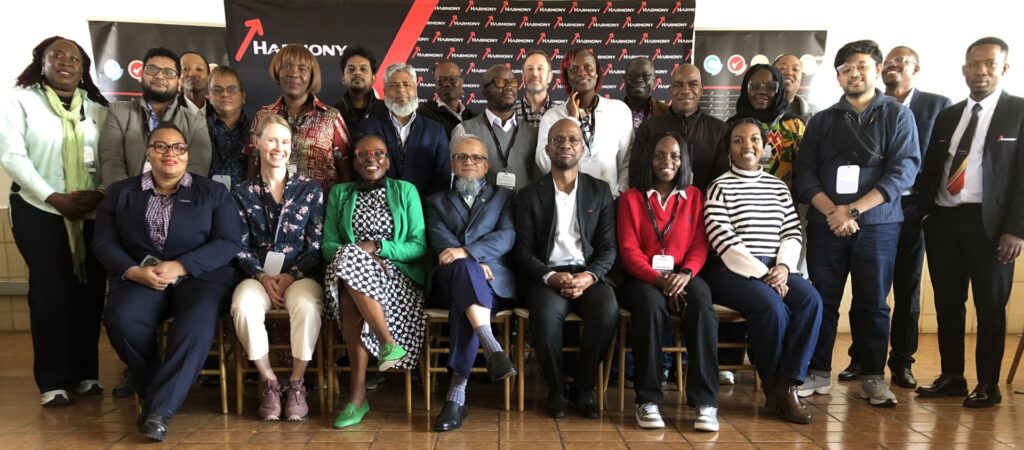
A key focus of the learning lab was South Africa’s long-running partnership between the Department of Health’s Medical Bureau for Occupational Diseases and Compensation Commissioner for Occupational Diseases (MBOD/CCOD) and the mining sector. As MBOD/CCOD undertakes its first major legal reform since the early 20th century (1912), participants examined how government contracting and public–private partnership arrangements have evolved to support current and former mineworkers affected by occupational lung diseases. Dr. Barry Kistnasamy, Head of Occupational Health / Compensation Commissioner, shared how South Africa’s partnership with the mining sector has been built through sustained collaboration with the Minerals Council of South Africa and involved stakeholders such as the mining companies, trade unions, provincial and neighboring country governments and ex-mineworker associations – demonstrating that successful contracting depends as much on stakeholder relationships and political commitment as on technical design. Dr. Nothando Moyo explained that the Minerals Council South Africa supplements government funding through a voluntary levy on its members (mining companies) supporting services for current and ex-mineworkers affected by occupational lung diseases including tuberculosis, silicosis, coal workers pneumoconiosis, asbestosis and lung cancers. Established in 2019, this mature PPP involves contract management and service level agreements with vendors that render services to the MBOD/CCOD. Participants learned in this session was the importance of relationships and the political economy around contracting.
Participants also explored how the partnership is driving broader institutional reform. With support from the learning initiative, MBOD/CCOD is advancing legislation to replace the Occupational Diseases in Mines and Works Act of 1973 with the proposed Compensation for Occupational Diseases in Controlled Mines and Controlled Works Bill. Dr. Kistnasamy explained the reform would establish a state-owned Mines and Works Compensation Authority with greater operational autonomy, a dedicated governance structure, sustainable financing through levies on mining companies, and responsibility for providing medical assessments, healthcare, and compensation services to current and former mineworkers. The session highlighted the importance of combining legal reform, sustainable financing, and strong governance to institutionalize contracting arrangements, with participants also learning how an early socio-economic impact assessment helped build the evidence base for the proposed legislation, which is expected to be enacted in 2027.
Learning in Action
Site visits gave participants an opportunity to observe firsthand how South Africa’s contracting arrangements operate in practice. At Harmony’s Gold Doornkop Mine in Johannesburg, participants examined the tripartite partnership between the Department of Health’s Medical Bureau for Occupational Diseases and Compensation Commissioner for Occupational Diseases (MBOD/CCOD), the Minerals Council South Africa, and Harmony Gold Mining Company. Under a Memorandum of Understanding, the government contracts the mining company to provide healthcare to its miners. Dr. Tumi Legobye, Harmony’s Health and Wellness Executive Director, and her staff demonstrated how the partnership functions through the Doornkop Medical Hub, where participants saw firsthand how integrated occupational health services are delivered to mineworkers and their families. A walkabout in its health center demonstrated their motto of excellence and the services provided to the mineworkers and their families. They are driven by improving workforce health and providing high-quality healthcare that keeps mineworkers as healthy if not healthier than the general population.
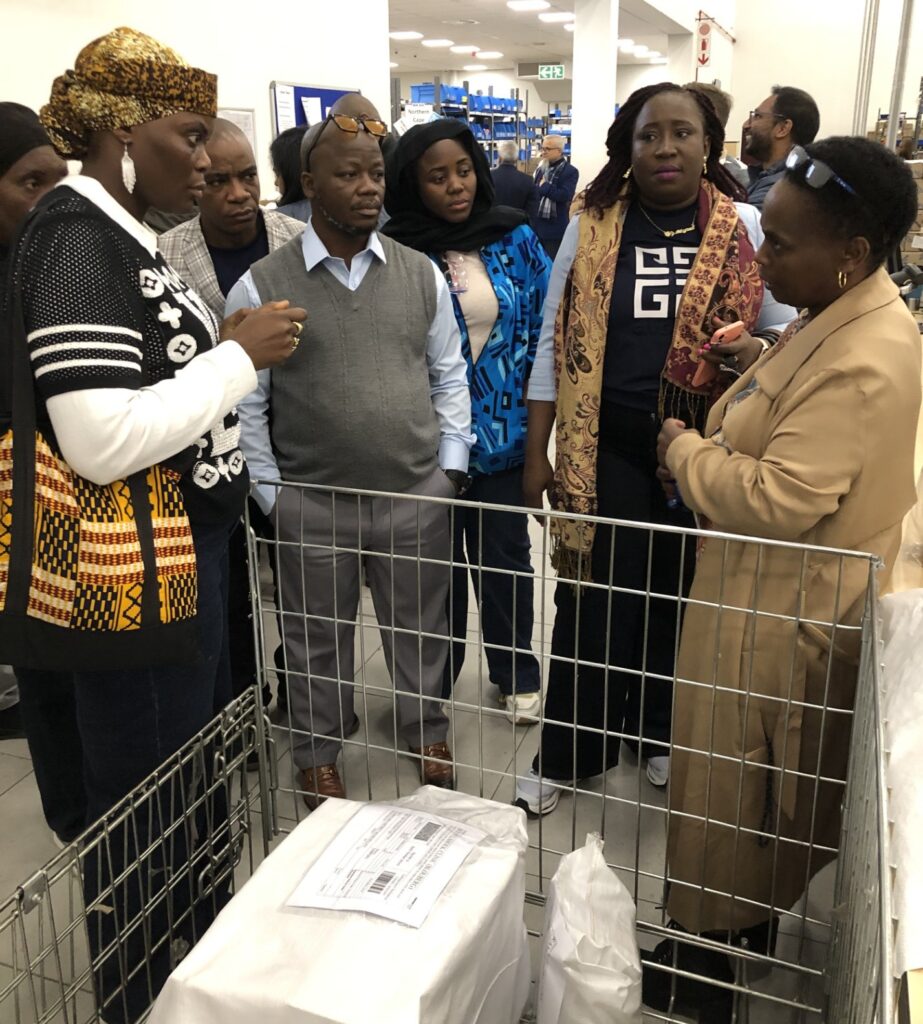
A second site visit showcased an innovative contracting model with Pharmacy Direct for medicine distribution for those with stable chronic disease. To address long wait lines at facilities and challenge the traditional model of medicine provision where patients travel to a health facility for their medicine, they developed an efficient model where patients pick up medicines at a more convenient location. The Central Chronic Medicine Dispensing and Distribution program is the flagship program for NHI that provides this alternative access for patients with stable chronic conditions. External pick-up points (PuPs) provide the patient with a more convenient option for the collection of their medicine which has been dispensed and distributed via the program. The PuP may be closer to their homes or workplace resulting in reduced transport costs with no out of pocket payment. Participants visited two such collection points – a Cipla container and a Smart Locker – to observe how the model improves convenience, reduces wait times, and expands patients’ access to essential medicines.
Turning knowledge into action
The summit demonstrated that effective health service contracting is not simply about purchasing services—it is about building strong partnerships between the public and private sectors to improve access, quality, and accountability. Participants returned home with practical ideas and a deeper appreciation of South Africa’s experience. A participant from Bangladesh reflected that the summit generated new ideas and a clear sense of the work ahead while another noted that lessons from the Pharmacy Direct site visit are already informing discussions with policymakers on adapting the chronic medicine dispensing model and piloting a locally appropriate approach. Similarly, the Liberian delegation reported plans to brief senior government leadership on the lessons learned and highlighted that the summit strengthened collaboration within their team.
Closing the summit, Dr. Mpho Rabada from South Africa captured the essence of the learning experience: “In today’s world of development, vision, strategy, output leadership, strategic and innovative contracting are the new currency…. We need to see clearly where we must go, to plan boldly how we get there, to lead with accountability for real and measurable outcomes and critically, to structure contracts and partnerships that make service delivery possible. When we design agreements that are strategic, flexible, and innovation-friendly, we unlock the full potential of everything else we bring to the table. Your teams embody this thinking, and that is what makes partnerships like ours worth investing in.” His remarks reinforced the summit’s central message: successful contracting depends not only on sound technical design, but also on strong leadership, collaboration, and partnerships that translate policy into better health services for people.
About Authors
Barry Kistnasamy: Head of Occupational Health / Compensation Commissioner, Department of Health, South Africa
Rufus Saye: Program Manager, National Leprosy and Tuberculosis Control Program, Ministry of Health, Liberia
Samiul Huda: Resident (Critical Care Medicine), Department of Anesthesia, Analgesia, and Intensive Care Medicine, Faculty of Surgery, Bangladesh Medical University, Bangladesh
Sara Wilhelmsen: Independent Consultant, Management Sciences for Health;
Authors thank Dr. Rahul Kadarpeta, Executive Director, Joint Learning Network for Universal Health Coverage, Amref Health Africa, and Tushar Mokashi, Technical Lead, Joint Learning Network for Universal Health Coverage, Amref Health Africa, for editorial review.
This blog is also available on the JLN website.
All photo credits: JLN.