
From Strategy to Stories: Bringing Trusted Health Information to Millions of Ukrainians
From Strategy to Stories: Bringing Trusted Health Information to Millions of Ukrainians
Adapted from SafeMed Activity, June 2026
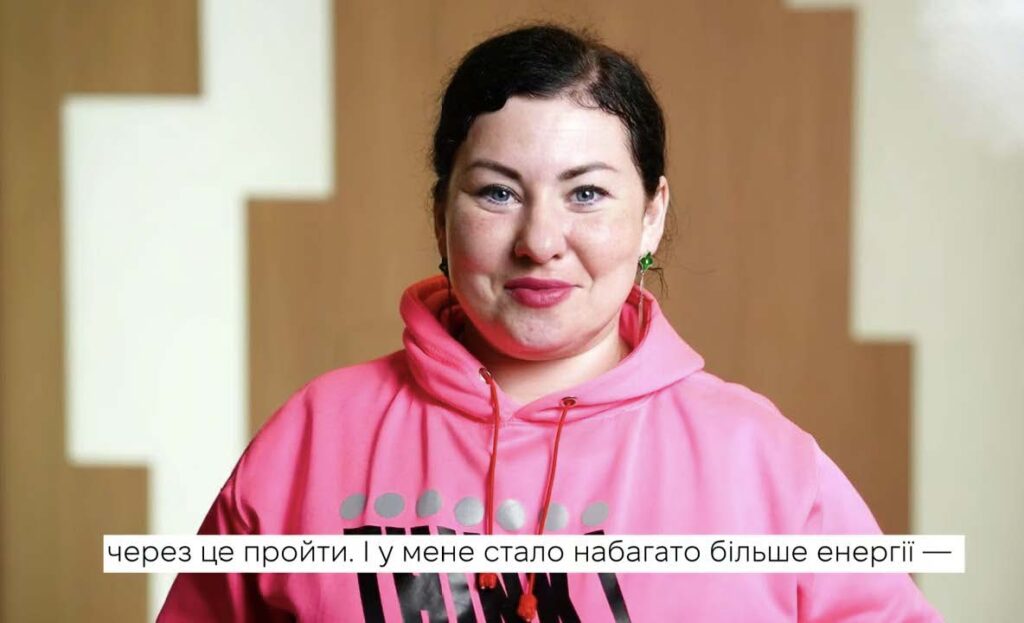
On a train returning to Kyiv, Tetiana watched a short video about a Ukrainian woman who had lived with hepatitis C for years before receiving treatment. What stayed with her was not a statistic, but her description of regaining the energy she thought she had lost.
The encounter was exactly what Ukraine’s Center for Public Health (CPH) hoped to create: a personal story reaching someone in an ordinary moment and opening a conversation about health, testing, and treatment.
In late 2025, CPH launched a national public awareness campaign featuring five Ukrainians sharing their experiences with HIV, tuberculosis (TB), and hepatitis C. CPH and the MSH-led, U.S. Government-funded Safe, Affordable, and Effective Medicines for Ukrainians (SAFEMed) Activity jointly developed the campaign, combining lived experience with expert public health guidance. The campaign also reflected the continuation of this work throughout Russia’s full-scale war, even as displacement and disruption made access to trusted health information more essential than ever.
“People cannot benefit from services and treatment if they do not know they exist or do not trust the information they receive.”
—Vira Horovenko, MSH’s Senior Technical Advisor
An earlier MSH story documented the campaign’s launch during European HIV-Hepatitis Testing Week. In the months that followed, the campaign expanded far beyond social media, bringing reliable health information into clinics, metro cars, and trains—and reaching millions of Ukrainians in the course of their daily lives.
A stronger foundation for public health communication
The campaign grew from a broader effort to strengthen how CPH communicates with the public.
Although CPH leads Ukraine’s response to HIV, TB, viral hepatitis, and other public health priorities, an assessment found that many Ukrainians knew relatively little about the institution or the services available to them. Fear, misconceptions, and stigma continued to discourage some people from seeking testing and treatment.
CPH and SAFEMed jointly conducted an organizational assessment, stakeholder consultations, audience research, and communications planning. Together, they developed CPH’s first organization-wide communications strategy, defining priority audiences, messages, and channels.
“People cannot benefit from services and treatment if they do not know they exist or do not trust the information they receive,” said Vira Horovenko, MSH’s Senior Technical Advisor.
That foundation helped CPH move from communicating about public health programs to connecting with people through recognizable, human experiences.
A real story can change the conversation
Mariia had lived with hepatitis C since the early 2000s, when treatment was lengthy, expensive, and inaccessible to many people in Ukraine. Over time, she came to accept constant fatigue as part of everyday life.
When newer treatment became available through Ukraine’s public health system, Mariia and her husband decided to seek care. Within months, her energy began to return.
Today, Mariia works with a community-based organization, helping people from vulnerable groups navigate the health system, obtain treatment, and connect with social services. Her own experience helps her reassure others that effective treatment is available and that no one has to face a diagnosis alone.
She agreed to appear in the campaign because she understood the particular power of lived experience: “A real person’s story works better than any charts or graphs.”
Mariia was joined by four other Ukrainians whose stories addressed HIV testing and treatment, TB, and hepatitis C. Their experiences showed audiences that these conditions affect people from all walks of life—and that diagnosis, care, and recovery are possible.
Meeting people in everyday spaces
The campaign videos were shown in 175 health care facilities across Kyiv and 11 other regions. During their first four months, they had the potential to reach an estimated 7 million patient visits.
The campaign also brought public health information well beyond clinical settings:
- The videos appeared on 2,440 screens across approximately 75% of Kyiv Metro trains, generating more than 1.5 million estimated exposures.
- Another 534 screens aboard Intercity trains connecting Ukraine’s major cities generated an estimated 500,000 additional exposures nationwide.
This broad distribution was especially important in the context of the ongoing war, which has displaced communities, disrupted daily life, and strained access to health services and reliable information.

By placing the videos in spaces people already use, CPH made messages about testing and treatment part of everyday life. Ukrainians encountered them while waiting for appointments, commuting to work, or traveling between cities—not only when actively searching for health information.
“If someone sees a video while waiting for an appointment or riding the train and later decides to get tested or seek care, then we’ve helped start a conversation,” said Mykola Hanich, Head of Communications at CPH.
Expanding a trusted national public health voice
The campaign reached millions, but its significance extends beyond the numbers.
CPH strengthened its ability to plan and deliver coordinated, audience-informed communications through trusted national channels. The institution now has a stronger foundation for explaining public health priorities, addressing misconceptions, and connecting Ukrainians with the services available to them.
That capability is an important part of a resilient health system. Making testing, medicines, and treatment available is essential—but services can only improve health when people know about them, understand them, and trust the institutions providing them.
What began as support for CPH’s first communications strategy became a national campaign grounded in Ukrainian voices and carried through the places where people live their daily lives. At a time of extraordinary pressure on the country’s health system, it demonstrated that trusted communication is not separate from access to care. It is one of the ways access becomes real.