
Women Leading Change: Transforming Primary Health Care in Ghana’s Akwapim South
Women Leading Change: Transforming Primary Health Care in Ghana’s Akwapim South
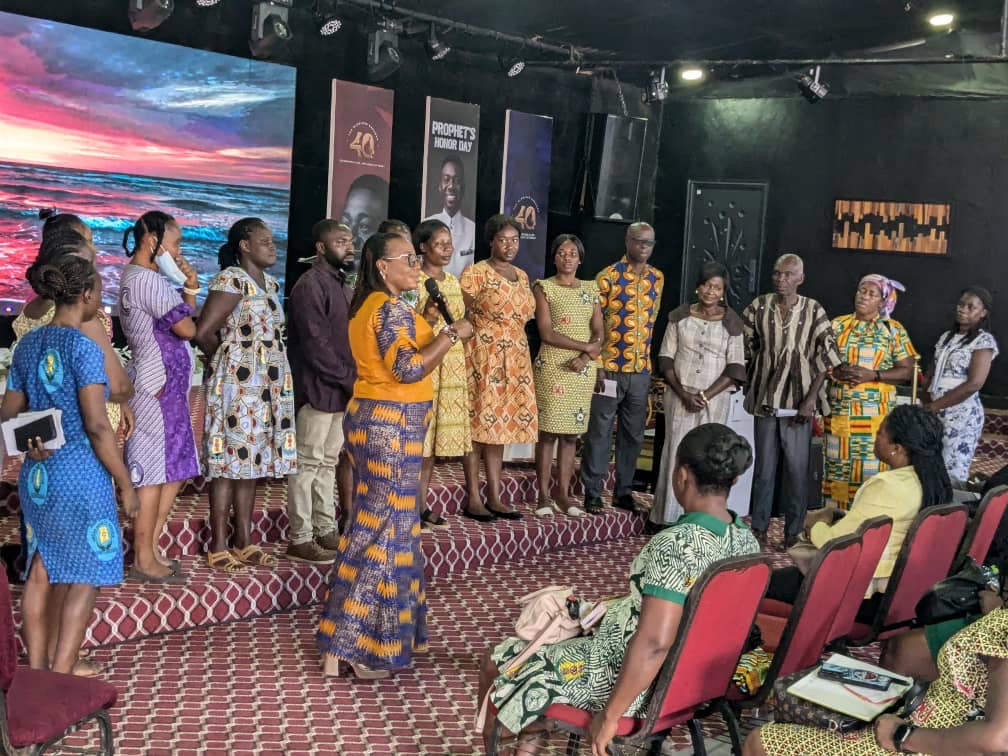
In Ghana’s Akwapim South District, essential medicines often ran out before they could reach the people who needed them most. Many patients walked miles to access care, only to find empty shelves. With nearly 70% of its population living in remote and hard to reach communities, the district lacked even the most basic equipment and safe accommodations for midwives and other critical staff, making it difficult to deliver life-saving care to mothers and newborns.
For District Health Director Emily Amponsah and Health Information Officer Margaret Donkye, these were not just statistics. They were daily realities standing between families and the health services they deserved. But over the past two years, these two women and their team have begun to change that story.
Through the Primary Health Care Performance Management (PHC-PM) Activity—funded by the Gates Foundation and led by MSH and partners across four districts in Ghana and Rwanda— Emily and Margaret joined a transformative effort to reshape how primary health care is managed, delivered, and sustained in their community.
A New Collaborative Approach to Leadership and Problem-Solving
Across Ghana, district health leaders have long understood what their communities need, but lacked the resources, tools, and autonomy to act effectively. The PHC-PM Activity is helping change that reality by partnering with District Health Management Teams (DHMTs) to strengthen local systems for planning, decision-making, and service delivery.
Through a combination of leadership development and coaching, data-driven dashboards, flexible catalytic grant funding, and peer learning across and within districts, the initiative supports DHMTs like Akwapim South to identify their own challenges, design practical, context-appropriate solutions, and lead sustainable improvements from within.
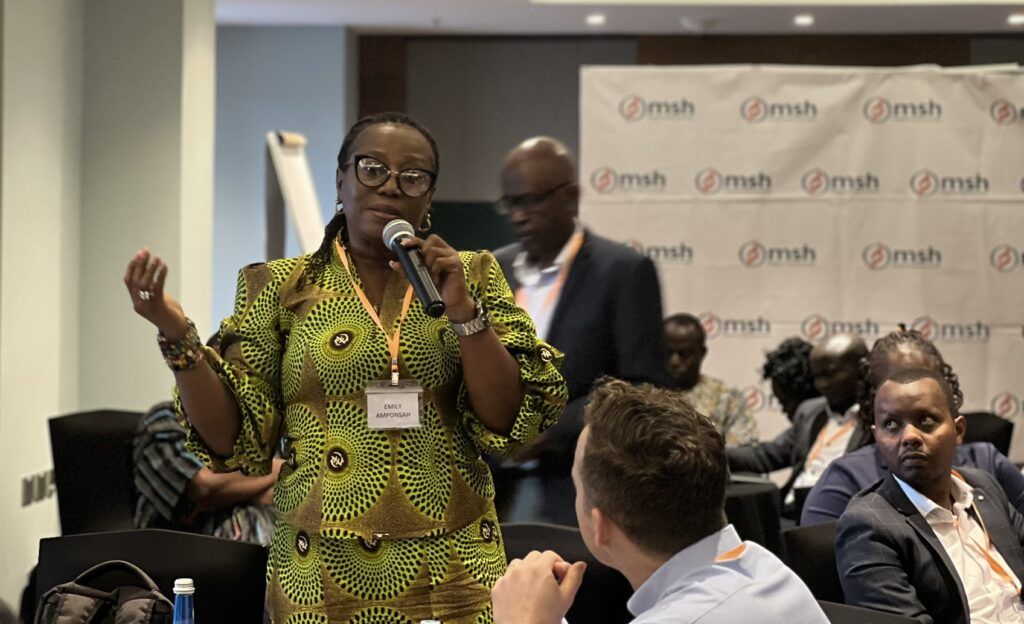
At the heart of this approach is the PHC Leadership Development Program (PHC-LDP), which guides district teams through the structured Challenge Model process—defining a shared vision as a DHMT, setting measurable goals, and tracking progress over time. Approximately every six months, district teams complete a performance improvement cycle: reviewing their data, setting priorities, designing and implementing solutions, and adapting strategies based on what they learn. Catalytic grants provided flexible funding tied to clear milestones, enabling teams to act on their plans by purchasing needed equipment, making infrastructure improvements, conducting supervision visits, and addressing local bottlenecks.
In March 2025, Emily and Margaret joined nearly 30 health leaders from partner districts—North Tongu in Ghana and Bugesera and Gicumbi in Rwanda—for a four-day learning workshop. Participants shared successes, tackled common challenges, and explored practical strategies to improve primary health care delivery across different contexts.

The exchange program empowered the two women to challenge traditional norms and develop collaborative, innovative ideas for strengthening their district’s health system. “The PHC-LDP is built on team building and networking,” reflects Margaret. “We’ve learned to work together more effectively as a team and understand each other’s perspectives. Now, we can leverage everyone’s capacity to strengthen our own health system.”
From Identifying Gaps to Implementing Solutions
This new collaborative way of working has helped the Akwapim South DHMT uncover and address gaps that had gone unnoticed for years.
Emily recalls one example: “We had nutritional supplements available, but they weren’t reaching the people who needed them. We didn’t know if the issue was awareness, distribution, or understanding of how to use them,” she explains. Their participation in the PHC-LDP process gave the team space to reflect on local data and listen to community feedback, helping them pinpoint that the real barrier wasn’t supply but understanding. “We discovered that mothers needed more education on proper use. Going out to the field to teach them made such an impact.”
Through the PHC-PM Activity, the team also tackled long-standing infrastructure challenges. They renovated midwife accommodations to ensure 24-hour care at health centers, improved pharmaceutical storage capacity, and strengthened supervision systems—improvements that have already contributed to better stock management and higher-quality maternal care.
Margaret points to another challenge: access to midwives. “Pregnant women in our district were struggling to reach their midwives,” she explains. The PHC-LDP experience helped the team use data and joint problem-solving sessions to uncover practical ways to bridge access gaps for pregnant women. “Using lessons from the program, we procured tricycles so midwives could reach pregnant women closer to their homes. We also began providing support for women in labor to ensure safe deliveries at health facilities.”
Through the PHC-PM Activity, the team also tackled long-standing infrastructure challenges. They renovated midwife accommodations to ensure 24-hour care at health centers, improved pharmaceutical storage capacity, and strengthened supervision systems—improvements that have already contributed to better stock management and higher-quality maternal care.
Sustaining Momentum: What’s Next for Akwapim South
The results speak for themselves. Stockouts have dropped from 85% in August 2024 to 7% in July 2025, a significant improvement that means more patients are getting the medicines they need when they need them. Maternal health services have strengthened, and the district team has built systems to sustain and build on this progress long after the PHC-PM Activity concludes.
“Even when the Activity ends, we now have the logistics, equipment, and knowledge to keep improving health care delivery for our community,” says Emily. “It’s already making a real difference, and we’re not stopping here.”
Strengthening Systems from Within
Akwapim South’s journey demonstrates the power of local leadership and of women-led transformation. Similar progress is unfolding across each of the four districts currently partnering with the PHC-PM Activity. By equipping district teams with the right tools, data, and decision-making autonomy, the Activity is supporting teams to strengthen their own health systems from within, driving sustainable improvements that outlast donor funding.
Through ongoing peer learning and exchange, Emily and Margaret, along with the health leaders in the other three districts, are building evidence for what’s possible when efforts to strengthen health systems are locally led. These lessons offer a roadmap for districts in Ghana, Rwanda, and beyond to adapt, scale, and sustain locally driven change, charting a path toward a future where empowered leadership becomes the foundation of strong primary health care.
The results speak for themselves. Stockouts have dropped from 85% in August 2024 to 7% in July 2025, a significant improvement that means more patients are getting the medicines they need when they need them