
Delivering under pressure: What it takes to keep medicines moving in fragile settings
Delivering under pressure: What it takes to keep medicines moving in fragile settings
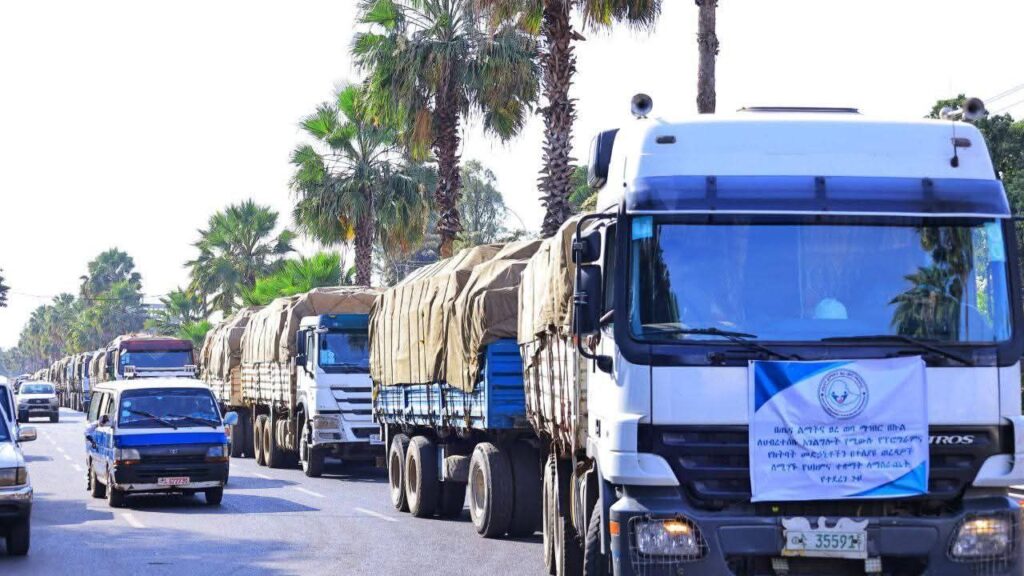
Addis Ababa, Ethiopia—April 28, 2026—In Ethiopia, getting medicines to the people who need them is no longer only a matter of procurement and delivery schedules. In parts of the country affected by conflict, fuel shortages, and disrupted transport routes, it is a daily test of whether the health system can continue to function at all.
Across Amhara and Tigray, that system is under sustained pressure. Roads are intermittently inaccessible. Fuel shortages constrain distribution. Health facilities face delayed resupply, stockouts, and rising demand from communities affected by displacement and insecurity. Yet essential medicines still need to move—and patients still need care.
Ethiopia’s national supply chain, led by the Ethiopian Pharmaceutical Supply Service (EPSS), remains central to that effort. In Amhara, where more than 95% of health facilities are affected by conflict, access constraints have sharply reduced routine delivery coverage. From hubs like Bahir Dar, commodities continue to flow to hundreds of facilities, including those serving displaced populations and high-demand hospitals.
“Ensuring uninterrupted access to essential health commodities is critical to sustaining lifesaving services”
A representative of the U.S. Department of State
What is keeping the system moving is not a single intervention, but a combination of strong coordination among government and partners, particularly through the Amhara Regional Health Bureau, alongside operational flexibility and long-term system strengthening. This work is supported in part by the U.S. Government-funded Supply Chain Strengthening (SCS) Activity led by Management Sciences for Health. The project supports last-mile delivery and emergency transport through third-party logistics, real-time stock monitoring, and U.S. Government funded commodity procurement, while also strengthening core system functions across forecasting, procurement, warehousing, and data use.
In Tigray, the consequences of disruption—and the importance of these investments—are even more visible. At the Mekelle EPSS hub, prolonged delays in resupply, compounded by fuel shortages, have led to stockouts of essential medicines. At the same time, fuel constraints have limited the ability to distribute available supplies to health facilities. At Ayder Comprehensive Specialized Hospital, frontline health workers report shortages of antibiotics and other critical supplies, directly affecting routine care.
“Ensuring uninterrupted access to essential health commodities is critical to sustaining lifesaving services,” noted a representative of the U.S. Department of State during a recent visit to the region.
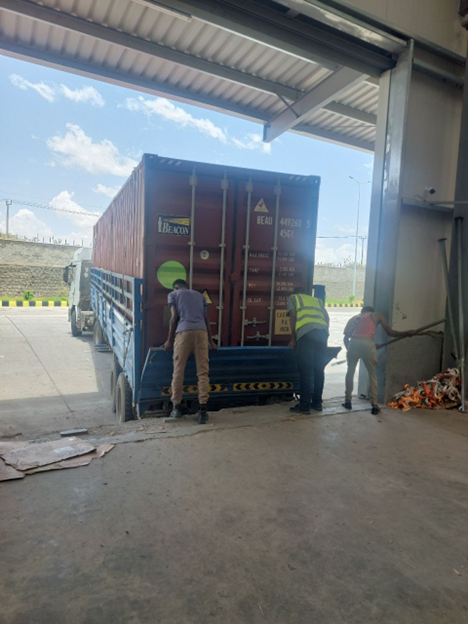
Just days later, that challenge became operational. Seven trucks loaded with essential medicines, including treatments for HIV, tuberculosis, malaria, and maternal and child health, were ready for dispatch to Mekelle and Shire, but unable to move. Fuel shortages across Ethiopia, driven by disruptions in global fuel markets linked to the ongoing conflict in the Middle East, threatened to halt the operation.
What followed was a coordinated, system-wide response: mobilizing third-party logistics providers, securing government approvals, negotiating fuel access across multiple administrative levels, and working directly with local authorities and fuel stations. After more than a week of coordination, the trucks moved.
By mid-April, 280 metric tons of lifesaving commodities—valued at more than 449 million Ethiopian birr (approximately $2.8 million)—had been delivered and are now being distributed onward to health facilities, even as fuel access remains a challenge.
This is what resilience looks like in practice: not only absorbing shocks but maintaining continuity of service delivery under compounded stress, conflict, supply disruption, and global market volatility.
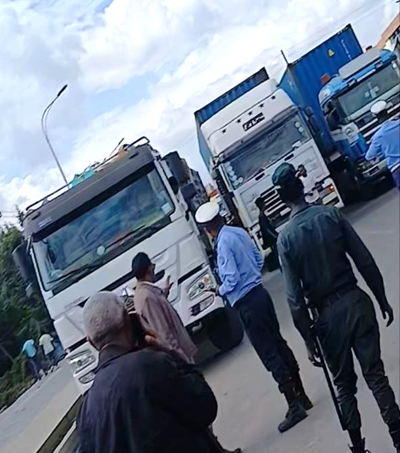
On April 21, 2026, U.S. Ambassador to Ethiopia, Ervin Jose Massinga, visited the EPSS Bahir Dar hub alongside regional leaders to observe these operations. The visit highlighted both the results of sustained investment—expanded warehouse capacity, strengthened logistics systems, and increased workforce capability—and the constraints that remain, including insecurity, fuel shortages, infrastructure challenges, and the continued need to advance supply chain maturity. During the visit, the Ambassador and H.E. Arega Kebede, President of the Amhara Regional State, reaffirmed their commitment to ensuring continued access to lifesaving health products and prioritizing fuel access for supply chain operations.
For those working within the system, these constraints are not temporary. They are structural features of operating in fragile settings.
Ethiopia’s experience underscores a broader lesson for global health: supply chains are not a downstream function—they are a core determinant of whether health systems can deliver results. In fragile and conflict-affected contexts, investments that combine immediate operational support with long-term system strengthening are what make continuity possible.
The ability to adapt—to shift delivery models, mobilize alternative logistics, maintain visibility on stock, and coordinate across actors—is not incidental. It is built.
Together, these efforts demonstrate how resilient, well-coordinated supply chains can deliver more than commodities—they sustain access to care, support frontline health workers, and help protect communities in times of crisis.