
From Data to Action: strengthening hospital decision-making in Ukraine
From Data to Action: strengthening hospital decision-making in Ukraine

Ukrainian healthcare workers continue to provide care under constant pressure – from air raid sirens to ongoing security risks. At the same time, they are treating an increasing number of complex cases, including traumatic injuries and chronic conditions that require more intensive care. These realities place additional strain on hospitals and make decisions about how resources are used more critical than ever. Hospitals must also ensure that patients continue to receive timely and effective care despite growing pressure on the healthcare system.
Today, hospitals play a more active role in planning procurement, allocating budgets, and selecting health technologies to invest in. As this role expands, one question becomes increasingly urgent: how can hospitals make these decisions quickly while ensuring the best possible outcomes for patients?
Selecting new or innovative technologies that are not yet part of standard practice remains a complex task. It requires balancing clinical value, costs, and operational feasibility.
In this context, the ability to assess what works in practice – clinically, economically, and operationally – is becoming essential.
The “Safe, Affordable, and Effective Medicines for Ukrainians” (SAFEMed) Activity, funded by the U.S. Government, has played a key role in the institutionalization of health technology assessment (HTA) in Ukraine, supporting its integration into national decision-making processes by mid-2022. At the national level, the State Expert Center (SEC), the body responsible for this function, leads its development and implementation and provides methodological support across the system.
While HTA is now established at the national level, its practical application at the hospital level is still evolving.
In many hospitals across Ukraine, decisions about procurement and health technologies have traditionally been driven by immediate needs, clinical experience, and available budgets. While this allows for rapid responses, it does not always provide a clear understanding of the longer-term impact on patient outcomes, hospital resources, and quality of care.
As a result, a gap has emerged between the complexity of these decisions and the tools available to support them. In practice, many facilities still lack structured approaches to compare options and guide decision-making.
At Nizhyn Central City Hospital in Chernihiv region, a cluster-level facility serving over 200,000 people, this challenge was also present.
“In practice, it was not always easy to assess in advance how widely a new technology would be used or what impact it would have,” says Olena Sheiko, Medical Director of Nizhyn Central City Hospital.
Without a structured way to compare options, it was difficult to determine which would deliver the greatest benefit for patients and ensure more efficient use of available resources.
The Approach: Introducing Hospital-Based HTA

To address this challenge, SAFEMed partnered with the SEC to support the introduction and practical application of hospital-based HTA (HB-HTA), building on earlier efforts at the national level.
Hospital-based HTA provides a structured way for hospital teams to compare treatment options using real data, including clinical outcomes, costs over time, length of stay, and the use of staff and resources before making investment decisions.
The approach was first piloted at the Amosov National Institute of Cardiovascular Surgery and later extended to the regional level, including Nizhyn Central City Hospital.
Through a Memorandum of Cooperation between the SEC and Nizhyn City Hall, SAFEMed provided technical support and facilitated the implementation of hospital-based HTA. This process enables clearer comparisons and provides a stronger basis for explaining and justifying decisions when engaging with management and other stakeholders.
“HB-HTA equips hospitals with an evidence-based tool for informed decisions when investing in health technologies,” says Viktoriia Nikulina, MSH’s Technical Advisor, Pharmaceutical Governance supporting the SAFEMed Activity.
It also changes how decisions are made. Clinicians, managers, and other specialists work together to assess technologies and explain their choices – making decisions more transparent, more consistent, and easier to justify.
From Decision to Impact: The VAC Therapy Case
One early application of HB-HTA at Nizhyn Central City Hospital focused on vacuum-assisted closure (VAC) therapy for treating complex wounds – offering a clear example of how more structured decision-making can improve care for patients with complex wounds.
Through the HB-HTA process, the hospital team compared VAC therapy with conventional treatment using ointment dressings, working through real cases step by step. The assessment considered treatment duration, risk of complications, length of hospital stays, total costs over the full course of care, as well as organizational and strategic factors.
“The team worked with real cases and compared different treatment approaches step by step,” says Iryna Kostiuk, a SAFEMed HB-HTA consultant, and Associate Professor at Bogomolets National Medical University. “This made it possible to see not only clinical outcomes, but also how each option affects costs and workload.”
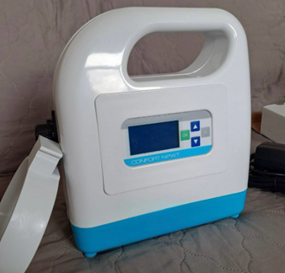
The analysis revealed clear differences. Patients receiving VAC therapy spent around 17 days in hospital, compared to nearly 24 days with conventional treatment — almost a week less per case. At the same time, the risk of infectious complications decreased from 5% to 1%, substantially reducing the likelihood of additional treatment and delays in recovery. For patients, this meant faster recovery, reduced risk of serious complications, and earlier return to daily life.
These improvements also translated into measurable cost savings. Although VAC therapy requires a higher upfront investment, the overall cost of treatment per patient was lower –19,855 UAH (approx. $462) compared to 25,868 UAH (approx. $602) for conventional care.
At the hospital level, the impact becomes even more visible. If applied more widely, VAC therapy could generate approximately 2.47 million UAH (approx. $57,000) in savings over five years, while also reducing pressure on hospital beds, staff time, and follow-up care.
Based on this analysis, a detailed HB-HTA report was submitted to municipal authorities to support and justify the decision to invest in VAC technology. As a result, VAC systems were procured and are now in routine use, making this treatment more widely accessible to patients and delivering tangible improvements in care.
“For patients with complex wounds, especially those with diabetes or severe injuries, the difference is significant,” says Yurii Onopriiko, surgeon at Nizhyn Central City Hospital. “What used to take several weeks can now take much less time, and in many cases, we can prevent more serious complications.”
What This Means for Patients and the Health System
The experience in Nizhyn demonstrates how more structured decision-making can improve patient outcomes while also supporting more effective use of healthcare resources.
For patients, this means faster recovery, fewer complications, and more effective treatment. For hospitals, it supports more efficient use of limited resources and provides a clearer, more transparent basis for investment decisions.
At the system level, it highlights the potential of hospital-based HTA as a scalable tool for strengthening decision-making and supporting more consistent, evidence-based choices – particularly in complex and resource-constrained environments.
Building on this experience, similar assessments are planned for scale-up in other regional hospitals with SAFEMed support, allowing for further integration and adaptation of the approach across different settings.
Even at an early stage, hospital-based HTA supports more informed and consistent decision-making at the hospital level. With further adaptation, this approach can be applied across different healthcare settings, contributing to more patient access and increased savings to the health system.
The SAFEMed Activity has supported the development and institutionalization of HTA in Ukraine since 2018, working in partnership with the Ministry of Health and the State Expert Center (SEC). Building on national-level HTA efforts, SAFEMed also supports the introduction of hospital-based HTA (HB-HTA), helping hospitals apply more structured approaches to evaluating medical technologies and informing investment decisions using clinical and economic data. Through technical support, expert engagement, and collaboration with healthcare facilities, SAFEMed helps strengthen decision-making processes that can improve patient care and support more effective use of healthcare resources.