How Flexible Catalytic Grants Are Strengthening District-Led Primary Health Care in Ghana and Rwanda
How Flexible Catalytic Grants Are Strengthening District-Led Primary Health Care in Ghana and Rwanda
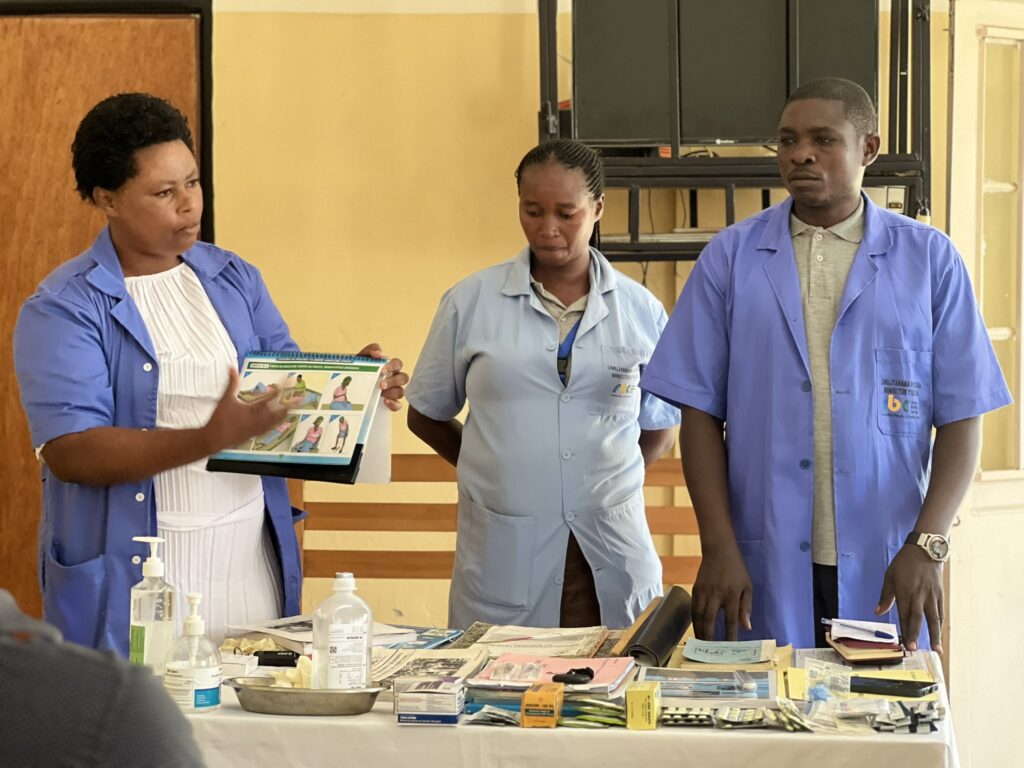
District health managers across Ghana and Rwanda can tell you exactly the challenges they are facing. They know which facilities lack electricity for cold chain storage, which communities become unreachable during the rainy seasons, which midwives are working without basic supplies. They see these patterns in their health data and understand the gaps between what communities need and what health systems can deliver.
What they often lack is the financial autonomy and resources to act on what they know. Central budgets often arrive late or in part, and even small purchases require approvals that take months. The distance between identifying a problem and solving it becomes impossibly wide.
But what happens when the people closest to the problems have the resources they need to address them? The Primary Health Care Performance Management (PHC-PM) Activity—funded by the Gates Foundation and led by Management Sciences for Health (MSH) and partners Ubora Institute in Ghana and Building Systems for Health and Three Stones International in Rwanda—set out to explore the use of catalytic grants to answer that question.
The PHC-LDP Approach: Combining Skills Development with Financial Autonomy
Catalytic grants provide districts with modest, flexible funding they control directly, enabling them to implement action plans and address operational gaps without waiting for central approvals. The PHC-PM funded grants were embedded within a broader approach to strengthen how districts use data to plan, decide, and act. Through the PHC Leadership Development Program (PHC-LDP), district teams across Akwapim South and North Tongu in Ghana, and Bugesera and Gicumbi in Rwanda learned to diagnose root causes, set priorities, and design and implement interventions through structured 6-month improvement cycles.
The amounts are deliberately modest, sized to address real operational bottlenecks while remaining at a level governments could realistically sustain.
The structured leadership approach ensures that catalytic grant funding is deployed strategically to implement the action plans districts develop through these cycles. Each participating district received a base amount of $10,000 per six-month cycle, with additional funding based on population size.1 The amounts are deliberately modest, sized to address real operational bottlenecks while remaining at a level governments could realistically sustain. The grants flow through existing government financial systems, and districts decide how to spend within clear parameters: funds must align with action plans, and subsequent disbursements depend on progress reported rather than performance targets achieved.
Addressing Operational Gaps through Catalytic Grants
After three full improvement cycles, districts have seen some tangible changes in service readiness and delivery. Through catalytic grants, district teams addressed immediate operational constraints identified during action planning. Districts procured essential equipment, including delivery kits, blood pressure monitors, and rechargeable lamps. They also made basic infrastructure improvements to maternity wards, washrooms, and staff accommodations at remote health centers. Alongside changes in supervision, data use, and team practices facilitated by the PHC-LDP program, these efforts helped facilities restore 24-hour delivery services and made rural postings more viable. In Akwapim South, for example, stockouts dropped from 90% to 61% after investments in storage and supervision systems. Several districts report higher rates of skilled delivery and increased antenatal care attendance.
Catalytic grants emerged as a solution to another long-recognized challenge across all four districts: Without reliable vehicles, health workers couldn’t conduct regular outreach to remote communities, and pregnant women in labor faced dangerous delays reaching facilities. The grants enabled districts to purchase motorized tricycles, which health teams now use to bring services closer to communities and to transport patients in need of emergency care.
Beyond the tangible impacts, the grants also enabled more consistent management routines and led to greater efficiency in the way these district health systems operate. With the catalytic grant funding, districts could conduct timely supervision visits, hold routine data review meetings, and follow up on activities without waiting weeks for budgetary approvals. Communities have noticed the difference too, reporting more trust in their local health facilities and greater willingness to health services.
Building the Case for Long-Term District Fiscal Autonomy
The catalytic grants were designed as a time-bound intervention to test a hypothesis: that modest, flexible district-level funding could enable DHMTs to translate leadership capacity and data insights into tangible improvements. The enduring value lies not in the grants themselves, but in the routines, competencies, and evidence they help establish.
Some districts have already begun integrating the costs of maintenance, supervision, and outreach into their annual budgets. More importantly, districts can now document with precision what it actually costs to address common bottlenecks, strengthening their position during national planning and budgeting processes.
At the national level, the lessons emerging from these four districts are beginning to inform broader conversations about PHC reforms and the role of fiscal decentralization in health system strengthening. What began as a learning experiment has generated practical evidence about what works, revealing valuable insights about what conditions enable districts to become effective stewards of their own health systems.
1 Six-month grant allotments ranged from roughly US $30,000 to US $45,000 per district.