
AI Can Transform Primary Health Care If Health Leaders Are Equipped to Act
AI Can Transform Primary Health Care…If Health Leaders Are Equipped to Act
By Dr. Anita Asiimwe and Colin Gilmartin
Artificial intelligence (AI) is increasingly seen as a means of transforming primary health care (PHC). It shows promise in improving access to and quality of services, reducing the burden on overstretched health workers, and making better use of scarce resources. Yet, as AI investments accelerate and data driven insights expand, a critical question remains: without the authority, capacity, and resources to act—nor clear accountability for results—will these investments actually improve health system performance?
This question comes into sharp focus through the experience of local health leaders who are accountable for improving health outcomes but often struggle to translate data insights directly into timely decisions. Their ability to act is frequently constrained by limited decision-making authority, lack of data analysis skills, and inflexible resources. Financial resources are often insufficient and difficult to mobilize, with higher-level approval typically required to adjust plans or reallocate funding where it is needed most. Routine team meetings are also often irregular or focused on reporting rather than problem-solving. While these dynamics predate AI, the scale and speed of AI make these constraints more visible and more consequential. As AI-enabled tools and analytics continue to scale across health systems, the primary constraint is no longer access to information, but whether leaders are equipped to turn data into improved performance and outcomes.
In two districts in Rwanda—Bugesera and Gicumbi—we have seen firsthand that insight alone does not drive change. The real value is created when insights are generated and local leaders are empowered to act on them. Through the Primary Health Care Performance Management work, district health management teams (DHMTs) in these districts now have a much clearer picture of how the health system is performing and where gaps persist. Data is timelier, more detailed, and more complete, stitching together insights across multiple health information systems. Visual dashboards, accessible through the Rwanda Health Analytics Platform, show trends in service coverage relative to national targets, human resource distribution, medicine stock levels, and emerging performance gaps across facilities. DHMTs have leveraged this routine data to strengthen service delivery and advance key PHC priorities, ranging from improving antenatal care coverage, boosting rates of anemia testing, to expanding nutrition and dental services, and making systemic changes to reduce neonatal mortality.
But better and more timely data has only been part of the equation. Whether insight translated into action depended on strong DHMT leadership, decision-making authority, collaboration across teams, and access to financial resources. A critical enabling factor has been the PHC Leadership Development Program (PHC-LDP), which helps DHMTs build practical leadership and management skills and creates routine, structured space for teams to review data together, analyze root causes, and design locally driven solutions. This has come alongside strong engagement with community leaders to ground priorities in local realities and build shared ownership of solutions. Modest but flexible catalytic grants have further supported DHMTs in addressing locally identified bottlenecks, from strengthening much-needed supervision and outreach to improving the availability of life-saving medical equipment and coordination across facilities and communities. When teams had the structure, skills, decision-making authority, and some degree of fiscal autonomy—with clear accountability for results– they were able to act and adapt based on performance, with early signs of improvement that will need to be sustained over time.
When teams had the structure, skills, decision-making authority, and some degree of fiscal autonomy—with clear accountability for results– they were able to act and adapt based on performance, with early signs of improvement that will need to be sustained over time.
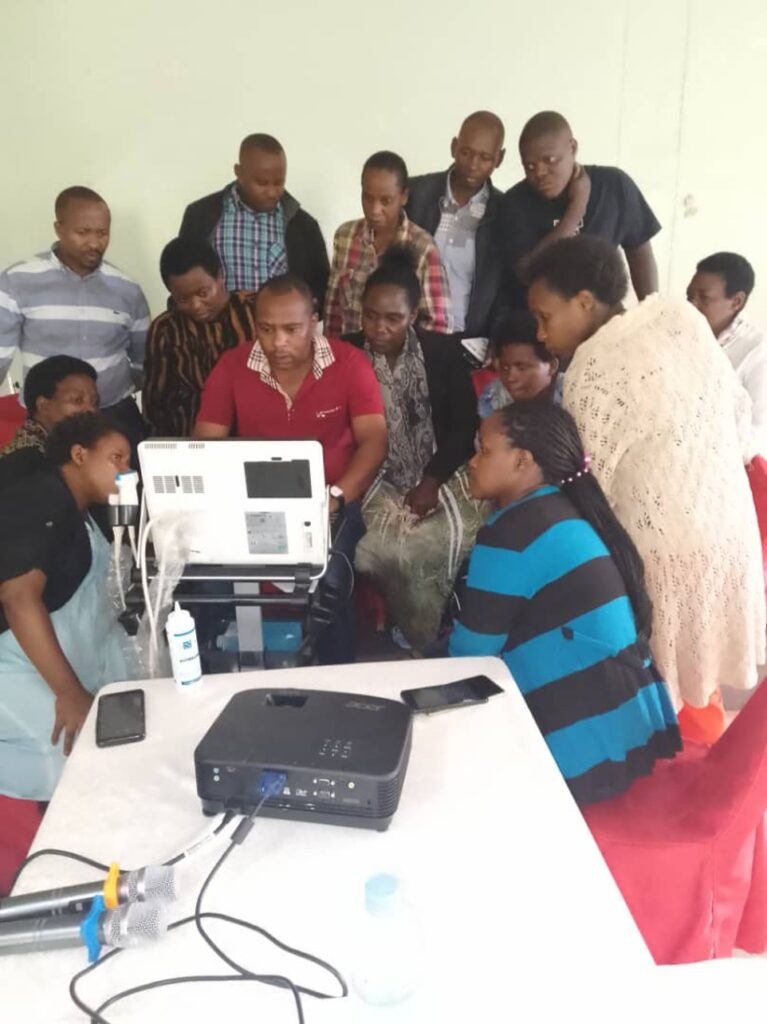
For example, early antenatal care is a critical entry point for protecting the health of pregnant women and their newborns, yet routine data in both districts showed that access lagged behind national averages. Through the PHC-LDP, DHMTs went beyond identifying underperformance to understanding why, using structured data reviews and root cause analyses to inform six-month action plans. In Bugesera, low coverage was driven by inconsistent adherence to care protocols, limited equipment, and low engagement of community health workers, leading the DHMT to prioritize service readiness, provider training, and community mobilization supported by catalytic grants. In Gicumbi, underperformance reflected long waiting times, inefficient patient flow, and gaps in provider skills, prompting investments in service reorganization, ultrasound training, strengthened supervision, and boosting insurance enrollment. Within a year, both districts recorded improvements in early antenatal care attendance, reinforcing the importance of pairing better data with leadership capacity and room to act.
The lessons from Bugesera and Gicumbi districts are especially relevant as Rwanda looks to transform its health system with AI investments, bolstered by the recent announcement from the Gates Foundation and Open AI. At the point of care, the potential of AI is already visible in tools that support clinical decision-making, reduce administrative burdens, and help health workers focus more of their time on patients. Beyond the clinical level, large language models will make it easier to query data across systems and generate insights in real time. Rwanda’s National Health Intelligence Center has already captured global attention for bringing together routine service data, supply chain information, and surveillance signals to highlight performance gaps and emerging risks.
As AI continues to scale, the volume and complexity of insights available to health systems will only increase, creating both opportunity and risk. AI will be instrumental in surfacing priorities and highlighting what is most urgent; however, without deliberate investments in enabling local leaders to act, these insights can quickly become overwhelming rather than empowering.
If AI is to meaningfully strengthen PHC, investments in technology must be matched by investments in the people at the center of the health system. As Paula Ingabire, Rwanda’s Minister of ICT and Innovation, recently stated: “Artificial intelligence carries enormous potential to support healthcare workers and to improve how care is delivered—but this potential can only be realized if AI is applied with purpose, strong values, and people at the center.”